

Minister of Science: We have over three thousand curricula that meet almost all the undergraduate needs of the country.
 Sep 13, 2026
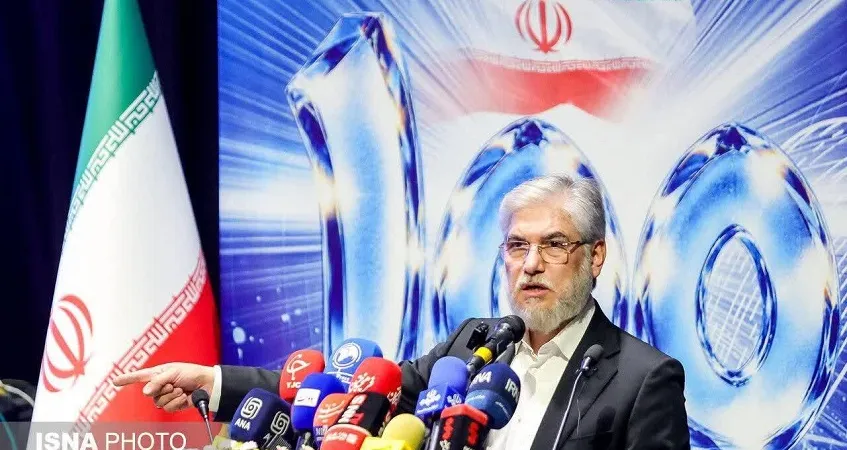
Dr. Hossein Simaei, the Minister of Science, Research and Technology, stated at the conference of university presidents and heads of educational, research, and technology institutions: "We have over three thousand curricula that meet almost all the undergraduate needs of the country."
According to the Public Relations of the Ministry of Science, Research and Technology, Dr. Simaei, at the conference of university presidents and heads of educational, research, and technology institutions in the country, emphasized that the recent war demonstrated that the country's defensive power is reliant on scientific power. He said: "If we had fallen short in science and technology, these achievements in the defense arena would not have been realized. The combination of scientific power and military power, along with the resistance and spirit of the people, led to these honors."
The Minister of Science stated: "I am very pleased that at the beginning of the academic year, we had the opportunity to hold a joint meeting between the esteemed university presidents and the officials of the Supreme Leader's representative offices in universities."
Referring to the country's developments since last year's in-person conference in Hamedan, he remarked: "From that conference until today, many bitter and sweet events have occurred in the country, the foremost of which is the martyrdom of the valuable policymaker in science and technology and the true supporter of the institution of science, the martyred Imam, His Eminence Ayatollah al-Udhma Khamenei. We have lost many martyrs; indeed, we have lost them, and they have attained union."
The Minister of Science also commemorated Martyr Saeed Shamqadiri, a professor at Iran University of Science and Technology, saying: "When I visited his family, the spirit and resilience of this family were very remarkable to me."
Dr. Simaei, referring to the developments of the two recent wars, said: "Alongside the bitterness, many honors were achieved for dear Iran, the analysis of which is not possible at this moment. I will simply say that we are proud that Iran was able to define the boundaries of the power of the world's most powerful army and expose their hand. This revelation has pleased even those who are 'our swords' and even the Europeans, as the stature of Americans has been revealed."
He outlined the three main themes of his speech as "Defense of the Institution of Science and University," "The Performance of Knowledge and Universities in the Past Two Years," and "Programs Implemented and Forthcoming," stating: "It is important to review the institutional function of an organization that serves the people; an organization that has grown and flourished thanks to the Islamic Republic."
The Minister of Science stated that the recent war was a war of technology and a war of science and technology. He said: "This war showed that our defensive power was certainly reliant on scientific power. If we had fallen short in science and technology, these achievements in defense would not have been realized. The combination of scientific power and military power, alongside the resistance and spirit of the people, created these honors."
Dr. Simaei identified the training of specialized human resources as one of the most fundamental services of the university and stated: "Even if the institution of science had provided no other service than the ability to train specialists for the country in any field, it would have rendered a great service. From elementary school to hospitals and medicine, from the judiciary and justice system to industry, services, and agriculture, there is no field where the institution of science is not present."
He added: "The university can be considered the most comprehensive scientific institution in the country. We have over three thousand curricula that meet almost all the undergraduate needs of the country. We must imagine what conditions the country would have faced if this institution did not exist or had not evolved in parallel with the country's needs."
The Minister of Science cited the enhancement of public culture as another important function of the university, stating: "The university not only trains specialized human resources but has also significantly contributed to public culture, the expansion of rationality, ethics, coexistence, and adaptability in the country."
He continued: "Especially thanks to the Islamic Republic, this esteemed institution has expanded to the farthest corners of the country and even to the borders, and today, a scientific institution or university unit is present in various parts of the country. This development has contributed to the enhancement of culture and the expansion of rationality."
Dr. Simaei, referring to the statistics of participation in the December riots, said: "Official statistics show that the lowest participation in riots and destruction was among the educated, and higher rates of participation were observed among those with diplomas and below; individuals who were either students or lacked sufficient university education. These 'Pahlavi-era sympathizers' can incite those who do not possess a good level of knowledge."
He added: "When spatial planning is discussed correctly, we must be careful that the university does not lose this cultural development function."
The Minister of Science identified the production of knowledge and presence among the world's scientific elites as another service of the university, stating: "In 1996, Iran's scientific rank was 54, and we had about 850 articles. Today, we have reached approximately 75,000 articles and a rank of 15 or 16."
Dr. Simaei added: "In future meetings, if there is an opportunity, I will explain why we can do better than we are, but are not; however, this path itself is an honor. Iran entered the serious stage of knowledge production approximately in the 1990s."
He continued: "Before the revolution, our university was primarily educational. Of course, we had many researchers, professors, and scientific elites in the country, but the university as an institution was not a research institution in today's sense; we did not have research institutes, scientific journals were not so developed, and article production had not become a public culture."
The Minister of Science said: "In the Islamic Republic, the university has moved from the research stage to the technology stage, and today we have gained the power and capability to link education to research, research to technology and innovation, and then to commerce, wealth creation, and the transition from a simple economy to a knowledge-based economy."
Dr. Simaei, referring to the capacity of the country's technology ecosystem, said: "Today, we have 60 science and technology parks in the universities of the country, and over 170,000 technologists are active in this ecosystem, the majority of whom are university-affiliated; from knowledge-based companies to technological nuclei."
He added: "50,000 products are produced in science and technology parks. If someone asks about the connection between universities and society and industry, one of the most important examples is these parks. Parks are products of universities, and companies are also products of universities."
The Minister of Science continued: "This complex, in the past year, a year in which the country was engaged in two wars, had a turnover of over 500 trillion Rials, precisely 558 trillion Rials."
He said: "Of these 50,000 products, two thousand are sanctioned products; therefore, the university, in addition to supporting the country's defense, has also contributed to the country's resilience and provides services in the daily lives of the people."
Dr. Simaei said: "These functions and services of the university have led to high social trust in professors and universities. Social trust in professors is almost the highest trust among various segments of society, and trust in universities is above average."
He identified the capability, efficiency, and ethical conduct within universities as factors shaping this social capital and said: "I have stated these points to emphasize that we must value and preserve this great asset of the system."
The Minister of Science said: "The least disorder and anomaly occurs in universities. There is no financial corruption in universities; of course, I am not saying it is zero, because we do not have any infallible institutions. There is no espionage in universities; therefore, there is no need to be so worried and concerned."
Dr. Simaei, referring to the extensive volume of academic activities in the country, said: "If we consider the entire institution of science and all universities, tens of thousands of decisions, lectures, research projects, defense sessions, publication of scientific journals and periodicals, and cultural and sports events are held daily; and this is in an arena with over three million students and millions of observers."
He added: "Today, all these mobile phones are observers, and an image of every event is recorded. Amidst tens of thousands of occurrences and with millions of observers, sometimes an incident occurs in a corner, and immediately the cry of 'Oh Islam!' is raised, and the tweets and artillery begin."
The Minister of Science emphasized: "If the goal is not to catch someone out, if the goal is not to weaken the scientific institution, and if we have not been deceived by the enemy and are not playing on the enemy's field, we must rectify faults with goodwill and good intentions."
He added: "It is not an art to overlook tens of thousands of decisions, classes, and curricula that are implemented daily due to a single dark spot and to question the entire university institution."
Dr. Simaei continued: "The institution of science in Iran holds a special position thanks to the spirit of resistance and the energy that the martyred leader injected into this country. According to the Usuliyyun, this 'renunciation' applies not to the most perfect individuals, but to the most prevalent instances; therefore, whenever we speak of universities, we should not generalize an exceptional case to the entire university."
The Minister of Science, referring to the decrease in higher education's share of the national budget, said: "Our share of the total national budget was 3.9 percent a few years ago, and today it has reached 2.3 percent; while our dependents have increased, and our missions have become heavier and broader."
He added: "Even this 2.3 percent, which is on paper, is not fully allocated, disbursed, and paid. A few years ago, our share was 3.5 to 3.9 percent. We need to see what services we have provided with how much resources and what we are currently receiving."
Dr. Simaei asserted: "If we expect something from the institution of science, the expectation should be commensurate with the authorities it possesses and the resources that have been provided to it."
He cited a verse from the Holy Quran: "لَا یُکَلِّفُ اللَّهُ نَفْسًا إِلَّا وُسْعَهَا" (Allah does not burden a soul beyond its capacity).
The Minister of Science continued: "We usually recite this verse in the personal sphere and say that every duty is subject to a person's power and ability; why should we not apply this rule in the public sphere as well? If you have expectations from an organization and structure, you must also consider its power and ability; see how much authority and how much credit you have given it."
Dr. Simaei said: "Despite all this, the institution of science in Iran is the most productive institution in the country."
The Minister of Science then referred to the impact of war and sanctions on the scientific production of countries, stating: "Russia is a military and nuclear superpower. In 2021, this country published and indexed about 132,000 articles, but today this figure has decreased to about 90,000 articles. When you ask for the reason, the answer is war and sanctions."
He added: "Russia had a negative growth of 31 percent in 2025; however, with all these conditions, we had a growth of 1.6 percent."
Dr. Simaei continued: "In 2021, we had about 79,000 articles, and our trend became downward from 2023, but again in 2025, despite the war, we had an article growth of 1.6 percent."
He said: "The fact that some countries have surpassed us, despite Iran's growth, has a scientific explanation and analysis because their growth has been compounded. Some of these countries have experienced a 40 percent growth in article publication, while they still have fewer articles in absolute numbers than us."
The Minister of Science emphasized the necessity of investment in universities, stating: "The key to the success of universities is the same as the key to the success of defense in the country. We invested well in the defense industry, and its structure is also very progressive."
He added: "If we want universities to utilize all their capacities and actualize these capacities, we must have appropriate investment and reform its structure, not weaken it."
Dr. Simaei said: "We have spent the little capital we have on universities and the institution of science. Some people spend people's money on newspapers and news agencies and then constantly criticize universities; instead of fostering cohesion, they cause agitation in universities."
He added: "Why should university funds be spent on newspapers and news agencies? We do not have unlimited and unaccountable money that is constantly spent on conferences, seminars, meetings, and the distribution of bonuses and gifts."
The Minister of Science emphasized: "The university is the healthiest institution, and the institution of science is the most immaculate institution. Of course, it is not infallible, and this is a relative comparison."
Dr. Simaei concluded by referring to the role of universities in the funeral ceremony of the martyred leader, stating: "The university also proved its worth in the epic funeral ceremony of the martyred leader, the martyred Imam, and fulfilled its duty."
He added: "We arranged over 300,000 accommodation capacities for the pilgrims of the sacred body of the martyred leader and their families, and fortunately, the universities were able to carry out this national and religious duty in the best possible way."
News Source: Public Relations of the Ministry of Science, Research and Technology.